Introduction
Many people in Ontario feel stuck in the same question:
“Do I really need a four-year degree to earn a good salary in Canada?”
Newcomers, international students, career switchers, and even local job seekers often discover that time and money are limited. Going back to university is not always realistic. At the same time, survival jobs do not cover rising rent, groceries, and transportation costs in cities like Toronto, Mississauga, Brampton, and Hamilton.
Note: We all know the stress of checking your bank balance after paying Toronto rents. Survival jobs are exhausting, and that’s why I want to show you a smarter way out, not just a faster one.
This is where short, focused certificate programs come in.
Across Ontario, employers now value practical, job-ready skills more than long academic titles. In healthcare, IT, skilled trades, business operations, and digital roles, many positions can be accessed with a 3 month certification if the training is industry-recognized and aligned with real hiring needs.
Important note:
A certificate does not guarantee a job. But the right certification can strongly improve your interview chances, your starting salary, and your confidence when competing in the Canadian job market.
In this guide, I will share what I have seen working with job seekers and employers in Ontario, which short programs actually lead to better-paying opportunities, which ones are in demand in 2026, and what most people misunderstand about “quick courses that pay well.”
What is the Easiest Certification to Get That Pays Well in Canada?

Why “Easy” Depends on Your Background
In Canada, “easy” does not mean effortless. It usually means:
• Short duration
• Clear job outcome
• No advanced math or theory
• Practical, hands-on learning
• Recognized by employers
For someone with basic computer skills, an IT support certificate may feel easy. For someone comfortable with tools, a safety or trade-related certificate might be simpler.
Personal Experience:
I’ve personally talked to newcomers in Mississauga who started with a simple CompTIA A+ and were hired within weeks because they focused on local networking alongside their studies.
From my experience, the easiest high-return certificates often include:
• IT Support and Help Desk
• Medical Office Assistant
• Personal Support Worker fast-track modules
• Bookkeeping and Payroll Foundations
• Workplace Health and Safety Certifications
These programs are designed for fast entry into the workforce and usually last 8 to 12 weeks.
Entry-Level Friendly Programs with Real Hiring Demand
Ontario employers often look for candidates who can start quickly with minimal training. Hospitals, clinics, logistics companies, and IT service firms regularly hire certified entry-level workers.
Most people miss this:
Employers care more about your ability to follow procedures, communicate clearly, and understand Canadian workplace standards than about long academic history.
Short certifications that include:
• Canadian compliance standards
• Software used by employers
• Customer communication training
Tend to lead to faster hiring and better starting pay.
Explore More:[Best AI Certificates for Beginners in 2026: Start an AI Career without Coding (2026 Edition)]
Salary Expectations for “Easy” Certificates
While salaries vary by city and employer, many entry-level roles linked to short certificates start between:
• CAD 22 to 35 per hour
• CAD 3,500 to 5,500 per month
These are not executive salaries, but they are far above minimum wage and offer growth.
Which Short-Term Course Has the Highest Salary Potential?

High-Income Fields That Accept Short Certifications
In Ontario, the highest-paying short courses are usually connected to:
- Information Technology
- Cybersecurity
- Data and Cloud Operations
- Specialized Healthcare Roles
- Industrial Safety and Compliance
For example, certifications like:
• CompTIA A+ or Network+
• Cybersecurity Fundamentals
• Cloud Support Technician
• Medical Laboratory Assistant modules
• Occupational Health and Safety certificates
Can lead to roles paying CAD 30 to 50 per hour within a few years of experience.
Explore More:[3 Month IT Certificate Programs in Canada with $60k Salary (Ontario Guide 2026)]
Why Employers Pay More for These Skills
Companies pay more when:
• A mistake can cost money or safety
• The skill is hard to replace quickly
• Compliance is legally required
• Technology changes fast
This is why IT security, health records management, and safety roles often pay better than general office jobs, even with short training.
Important warning:
Avoid courses that promise “six figures in three months.” Real employers in Canada do not hire based on marketing claims. They hire based on verified skills and local experience.
Realistic Growth Path
A 3 month certificate is usually a starting point, not the end. Many high earners:
• Start with a short certificate
• Gain 1 to 2 years of experience
• Add advanced certifications
• Move into specialist or supervisory roles
This step-by-step growth is how short programs lead to long-term income.
Which Course is best for 3 Months in Ontario?

Matching Course Choice with Local Hiring Needs
The “best” course is the one that:
• Matches your ability
• Is recognized in Ontario
• Has active job postings
• Fits your long-term career path
In 2026, Ontario employers are actively hiring in:
• Healthcare support roles
• IT support and systems monitoring
• Skilled trades assistants
• Supply chain and logistics
• Financial and administrative support
Short programs aligned with these sectors perform better in the job market.
Read Detailed Info: [3-month medical Certificate Programs in Canada for International Students]
Community Colleges vs Private Institutes
Ontario community colleges often offer:
• Employer-recognized certificates
• Co-op or practicum exposure
• Career services support
• Better trust from recruiters
Private institutes can be faster but must be carefully checked for accreditation and employer recognition.
Most people miss this:
A certificate from a well-known Ontario college can sometimes open more doors than a longer diploma from an unknown private provider.
Where to Study in Ontario?
Most employers in Ontario trust certificates from well-known Public Community Colleges. If you are looking for programs, check these institutions first:
- In the GTA: Seneca Polytechnic, George Brown College, and Humber College.
- In Mississauga/Hamilton: Sheridan College and Mohawk College.
- In Kitchener/Waterloo: Conestoga College.
- In London: Fanshaawec College.
These colleges have strong ties with local industries, which means their certificates carry more weight during a job interview.
Have You Question:[ Which AI Certification is Best in 2026? Expert Rankings]
Choosing Based on Work Permit and Study Rules
International students and newcomers must also consider:
• Work eligibility
• Study permit conditions
• Program recognition for employers
• Part-time job compatibility
Always choose programs that fit your legal status and long-term plans in Canada.
What Jobs Pay Around $50 an Hour with Short Certifications?

Roles That Can Reach High Hourly Rates
In Ontario, reaching CAD 50 per hour with short certification usually requires:
• Specialized technical skill
• several years of experience
• Industry-recognized credentials
Examples include:
• Cybersecurity Analysts
• Cloud Support Engineers
• Industrial Safety Officers
• Specialized Medical Technologists
• Construction Safety Supervisors
These roles may start lower but grow steadily.
Freelance and Contract Work Opportunities
Some certificate holders move into:
• IT consulting
• Health compliance auditing
• Safety training
• Technical support contracting
Contract roles can pay higher hourly rates but require strong communication, reliability, and Canadian work experience.
Important note:
High hourly pay often means no job security, no benefits, and higher responsibility. Many people prefer stable salaried roles with steady growth.
Employer Expectations in Canada
Canadian employers expect:
• Punctuality
• Clear communication
• Safety awareness
• Documentation skills
• Team collaboration
Certificates help, but workplace behavior and reliability often determine promotions and pay raises.
Table: Example High-Value 3 Month Certificates and Entry-Level Pay (Ontario)
| Certificate Area | Typical Duration | Entry-Level Pay Range (CAD/hour) | Growth Potential |
| IT Support | 8–12 weeks | 22 – 30 | High |
| Cybersecurity Basics | 10–12 weeks | 25 – 40 | Very High |
| Medical Office Assistant | 12 weeks | 23 – 32 | Medium |
| Occupational Health & Safety | 8–12 weeks | 28 – 45 | High |
| Bookkeeping & Payroll | 8–10 weeks | 22 – 35 | Medium |
Which Certificate is in high in Demand in Ontario Right Now?
Ontario Market Reality in 2026
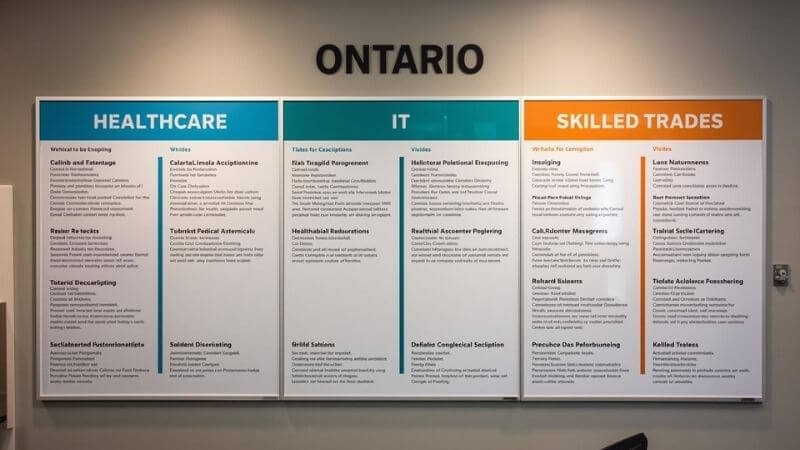
According to current Labour Market Insights (LMI), Ontario is facing a big shortage of workers in specific areas. Because of the aging population and new technology, the government is prioritizing hiring in Healthcare, IT Security, and Skilled Trades.
If you choose a 3-month program in these high-demand sectors, you are not just getting a certificate you are filling a gap that the province desperately needs to fix. This is why these roles offer more stability and faster hiring.
Healthcare Support Certifications
Ontario’s aging population and hospital expansion have created steady demand for:
• Personal Support Worker fast-track modules
• Medical Office Administration
• Health Information Management
• Pharmacy Assistant certificates
These roles may not always start at very high salaries, but they offer strong job stability and overtime opportunities. Many hospitals and long-term care facilities prefer candidates who already understand Canadian patient safety standards and electronic record systems.
Most people miss this:
Healthcare employers value soft skills as much as technical training. Communication, empathy, and documentation accuracy often matter more than speed.
Technology and Digital Support Certificates
In 2026, Ontario companies continue to hire for:
• IT Help Desk
• Cloud Support
• Cybersecurity Operations
• Data Reporting and Business Intelligence tools
Even a short certificate can open doors to entry-level roles that grow quickly with experience and additional credentials.
What Skills Can You Learn in 3 Months That Employers Actually Want?

Practical, Job-Ready Skills
In three months, a focused program can help you build:
• Technical software skills
• Workplace communication
• Problem-solving methods
• Safety and compliance awareness
• Basic project coordination
These are the skills Ontario employers test during interviews and probation periods.
Transferable Skills That Increase Pay
Short programs that include:
• Customer service communication
• Technical documentation
• Time management
• Team collaboration
• Canadian workplace ethics
Often lead to faster promotions and better performance reviews.
Important note:
Your certificate gets you the interview. Your behavior and learning attitude get you the raise.
What Job Can Make Around $10,000 a Month without a Degree?

Reality Check on High Monthly Income
Earning CAD 10,000 per month without a degree is possible, but usually requires:
• Several years of experience
• Specialized technical or consulting skills
• Contract or freelance work
• Strong reputation and network
Fields where this happens include:
• Cybersecurity consulting
• Cloud systems administration
• Specialized construction safety
• Digital marketing strategy
• Technical project coordination
Short certificates can be the first step, but long-term income comes from experience, not speed.
Do Certifications Guarantee a Higher Salary?

What Employers Actually Look For
In Ontario, employers evaluate:
• Skill relevance
• Work experience
• Communication
• Reliability
• Cultural fit
A certificate alone does not guarantee a higher salary. It improves your chances of entering a better-paying field and negotiating from a stronger position.
How to Use a Certificate Strategically?
The best approach is:
• Combine certification with entry-level work
• Learn Canadian workplace systems
• Build references
• Add advanced training later
This path leads to steady income growth rather than unrealistic expectations.
What Certifications Can You Get in Two Weeks

Ultra-Short but Valuable Certifications
Some recognized short certifications include:
• Workplace Hazardous Materials Information System (WHMIS)
• First Aid and CPR
• Food Safety
• Construction Safety Orientation
• Customer Service Excellence
These do not lead to high salaries alone, but they:
• Improve employability
• Help in part-time jobs
• Support entry into regulated workplaces
• Add credibility to your resume
They are often stepping stones, not final career solutions.
What Jobs Pay About $3,000 a Month without a Degree?

Realistic Entry-Level Roles
In Ontario, many certificate-based roles earn around CAD 3,000 to 4,500 per month, such as:
• IT Support Technician
• Medical Office Assistant
• Bookkeeper
• Logistics Coordinator
• Customer Support Specialist
These jobs offer growth, benefits, and skill development, which matter long-term.
How Some People Reach $100,000 a Year without a Degree?

The Long-Term Growth Path
High earners without degrees often:
• Start with short certifications
• Gain hands-on experience
• Add advanced professional credentials
• Move into specialist or supervisory roles
• Develop leadership and communication skills
Fields include:
• Cybersecurity
• Cloud Infrastructure
• Construction Management
• Industrial Safety
• Technical Sales
This process takes time, but it is realistic and respected in Canada.
The Career Ladder: From a 3-Month Course to $100,000 a Year
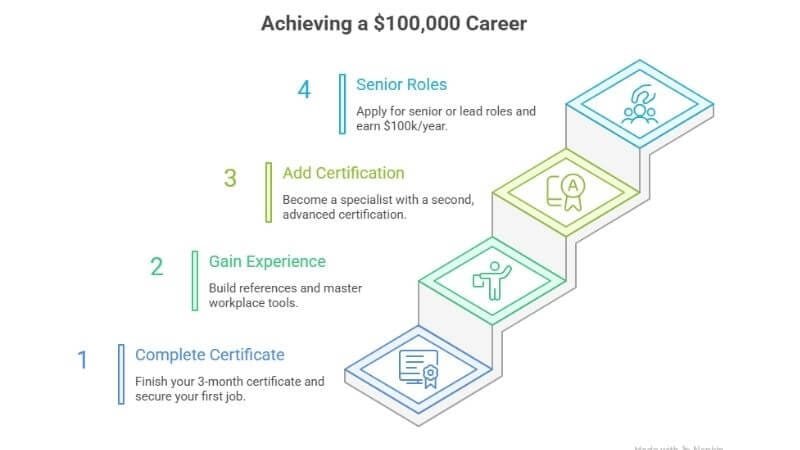
Think of a short certificate like the key to a locked door. It gets you inside, but you have to walk the path to reach the top. Here is a realistic roadmap:
Step 1 (Months 1-3): Complete your 3-month certificate and get your first job (Starting at $22–$30/hour).
Step 2 (Year 1): Gain “Canadian Experience.” Learn how the workplace works, build references, and master the tools.
Step 3 (Year 2): Add a second, more advanced certification while working. This makes you a “Specialist.”
Step 4 (Year 3+): Apply for Senior or Lead roles. In fields like Cybersecurity or Safety, this is where you can cross the $50/hour or $100k/year mark.
FAQs
1. Are 3 month certificate programs respected by Ontario Employers?
Yes, if the program is industry-recognized and aligned with job requirements. Employers value practical skills and Canadian workplace readiness more than program length.
2. Can international students work after completing a short certificate?
Work eligibility depends on your study permit and immigration rules. Always check official government sources and your institution’s guidance.
3. Which sector hires the fastest in Ontario?
Healthcare support, IT services, logistics, and skilled trade’s assistants often have faster hiring cycles.
4. Is online certification accepted by Canadian Employers?
Yes, if the provider is reputable and the skills are verifiable through testing or practical assessment.
5. How soon can I expect salary growth after certification?
Most people see growth after 6 to 24 months of relevant work experience and performance.
Coming Soon on LimitedHire.com
Coming Soon articles:
“See which Ontario jobs are hiring the fastest right now”
“Explore careers that do not require a university degree”
“Learn how to prepare a resume that Canadian employers trust”
Final Trust Note
So, Today we discuss that Short certificate programs can be powerful career starters in Canada when chosen carefully. They do not replace experience, but they can open doors, improve confidence, and help you move out of low-paying survival jobs into stable, skilled roles.
You may explore:
- Read Medical Courses: [3-month medical Certificate Programs in Canada]
- Read IT Courses: [3 Month IT Certificate Programs in Canada]
- Read about Online Course:[3 Month Certificate Programs in Ontario (2026)]

Gurya is the founder and lead author of LimitedHire.com, specializing in research-based career guides for the Ontario job market. Dedicated to accuracy and transparency, Gurya provides essential employment resources to help local and international professionals succeed in Canada.